Date: 2024-02-29 19:00:48 | Story: Stephanie Maxwell Newton | Art Direction: Bailey Dougan |
The 1836 Club: Also known as The Packet House and the McDonald-Wait-Newton House
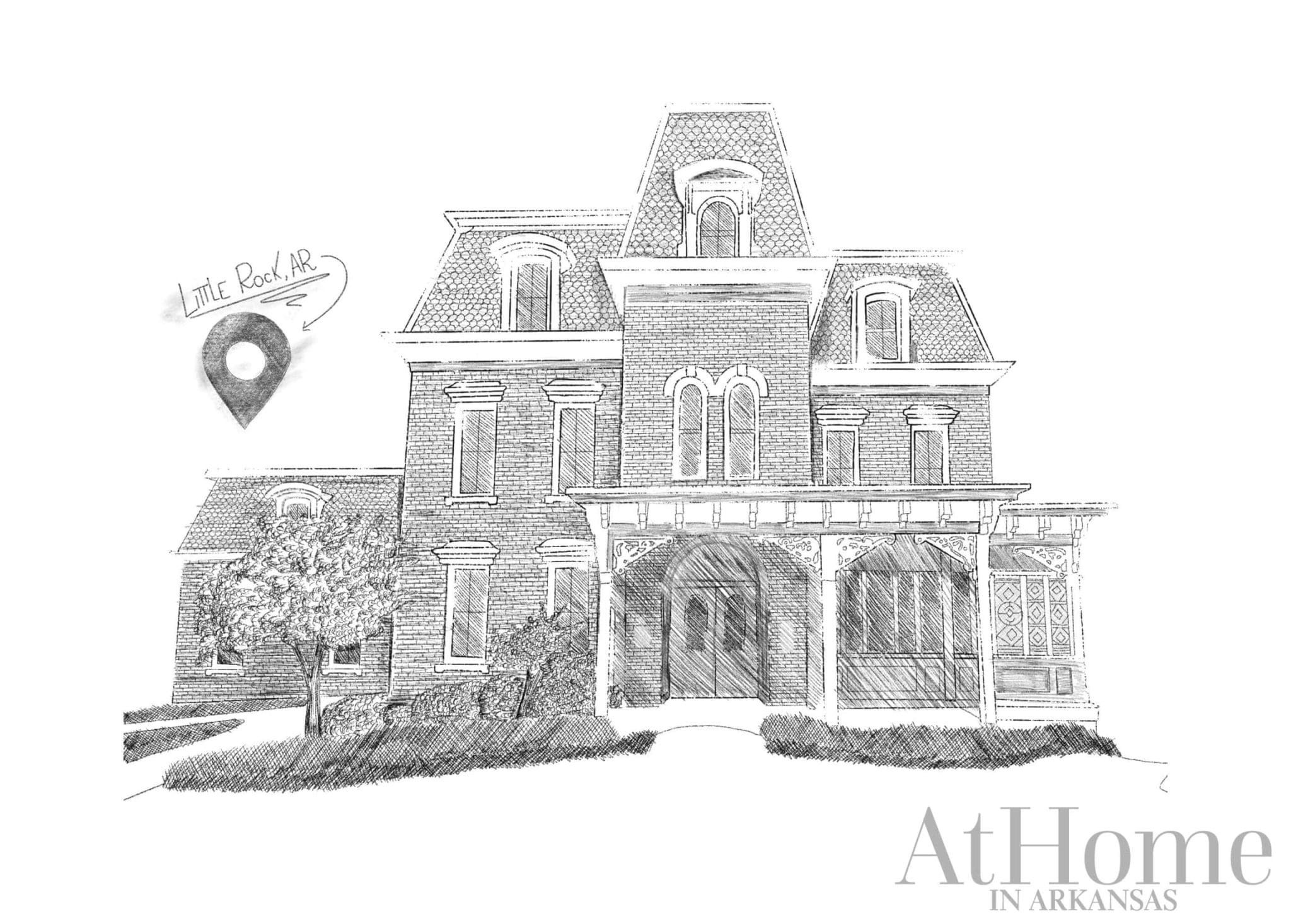
Though named for the year Arkansas became a state, the story of The 1836 Club—or rather, the building it occupies—begins in 1869. This grand mansion situated near downtown Little Rock was built by Alexander McDonald, a banker and Union Army soldier who moved to Arkansas shortly after Pulaski County had been taken by Union forces. According to the Encyclopedia of Arkansas, McDonald and four other wealthy Northerners built mansions along a section of Cantrell Road, then called Lincoln Avenue, leading the area to be nicknamed “Carpetbagger’s Row.” Today, McDonald’s house is the only one still standing.
“This was one of the largest homes in Arkansas when it was built,” says Mark Camp, owner of The 1836 Club. Mark says he became interested in history and old homes at a young age; naturally, when this property came up for sale, his curiosity was piqued. He and some friends had been looking for a place to open a private dining club, and Mark was captivated by the home’s place in history. “She has seen it all,” he says, describing the whirl of events such as Reconstruction, women’s suffrage, and the Civil Rights movement—to name a few—that have shaped the city while the house stands
as witness.
After McDonald sold the house, a series of prominent families took up residence until the 1940s, when it was sold and converted into apartments, then law offices. Throughout the 1970s and ’80s, it became a restaurant called The Packet House, a nod to the many packet boats that were once visible delivering goods via the Arkansas River. The name stuck, and many use this moniker still today. Since opening The 1836 Club in 2016, Mark has become so enamored with the history of the home that he has written a book about the subject (If Walls Could Talk: The Packet House Remembers), which he intends to self-publish this spring.
Illustration by Bailey Dougan
