Date: 2016-10-21 09:38:51 | Story: Jennifer Bonds | Photography: Rett Peek | Styling: Chip Jones |
On the banks of the Arkansas River, a townhouse built by a prominent Little Rock developer is now home to a collection of antique furniture, books, and maps

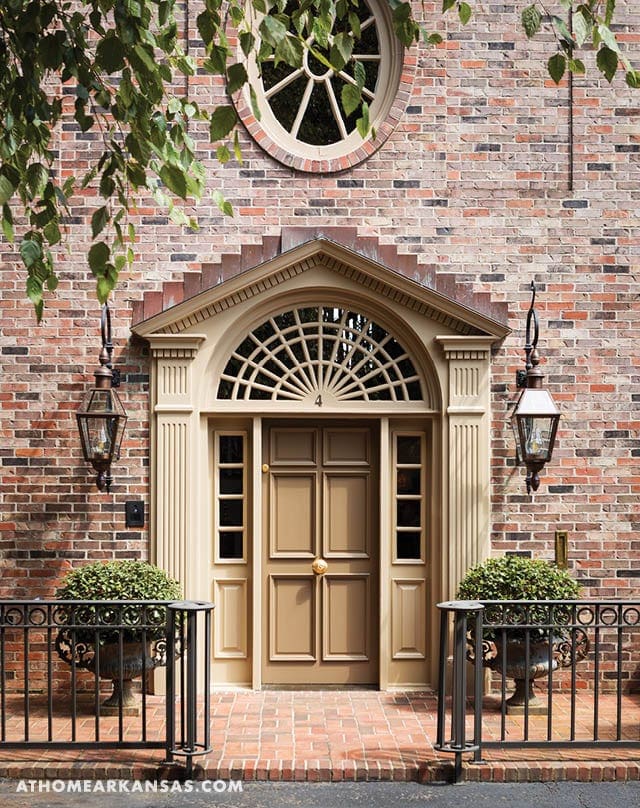
Downsizing does not mean sacrificing style, as designer M. Bruce Woodward proved when he and his mother and father—Mr. and Mrs. Mac Woodward—moved from their family home on Edgehill to a smaller townhouse near the banks of the Arkansas River. “You can live just as well in 1,000 square feet as in 7,000. It’s about making classic choices that fit your lifestyle,” he says. Woodward gave the home, built by developer Virginia Bailey, a fresh update with an extra dose of style, keeping the Southern principles of comfort and practical formality in mind. And, while, Woodward’s father passed away shortly after the move, he and his mother continue to enjoy the easy elegance of the newly renovated home.
Designing in the Details
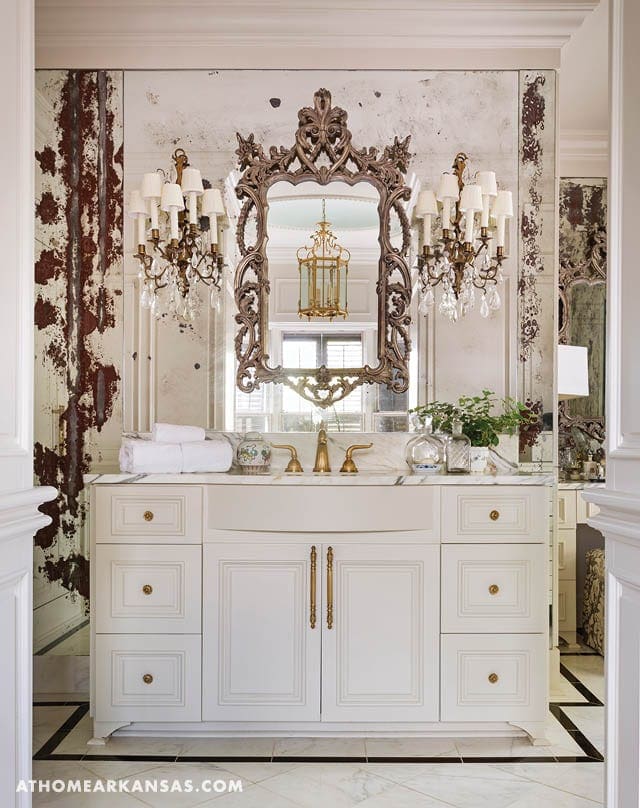
The Woodwards call Little Rock home, but also spend time on their ancestral property near Magnolia, so their goal was to find a smaller space reminiscent of a grand, formal home. At first glance, he thought paint and a few minor updates would suffice, but, in the end, the entire unit was taken down to its studs. “Once we got knee-deep in the renovation, I decided to make 40-year choices,” Woodward explains. “I wanted to add a lot of detail and sophistication.” Inspired by homes in Charleston and New York, Woodward added moulding, paneling, and—in a few select places—wallpaper to the Georgian-inspired residence, which was built in the early 1980s. A soft gray paint color provides continuity throughout the downstairs rooms and is an unobtrusive backdrop for the family’s collection of antiques. Woodward punctuated the spaces with muted colors, bold—but minimal—accessories, and modern art. “Design is cyclical. Some things may fall out of favor temporarily, but a classic style will always come back around,” he says.
Timeless Formality
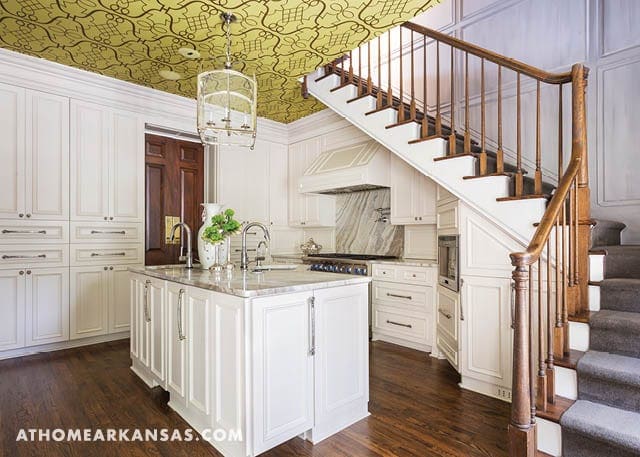
“To enclose a room instead of open it up is almost unheard of these days,” Woodward says of his decision to remove an opening into the kitchen that was over the sink. “It’s still very accessible to the map room and the dining room, but with doors, there is also the option to close it off.” An avid cook, Woodward puts the space to frequent use, but designed the cabinetry to conceal the more hardworking features. Slide-out drawers inside the cabinetry hold china, two sinks and two dishwashers—hidden behind panels—make cleanup a breeze, and the countertop is a durable blend of marble and granite. Central to the rooms at the back of the house, Woodward designed the space to feel more like a butler’s pantry. “It’s all there; I just don’t like to see it,” he explains.
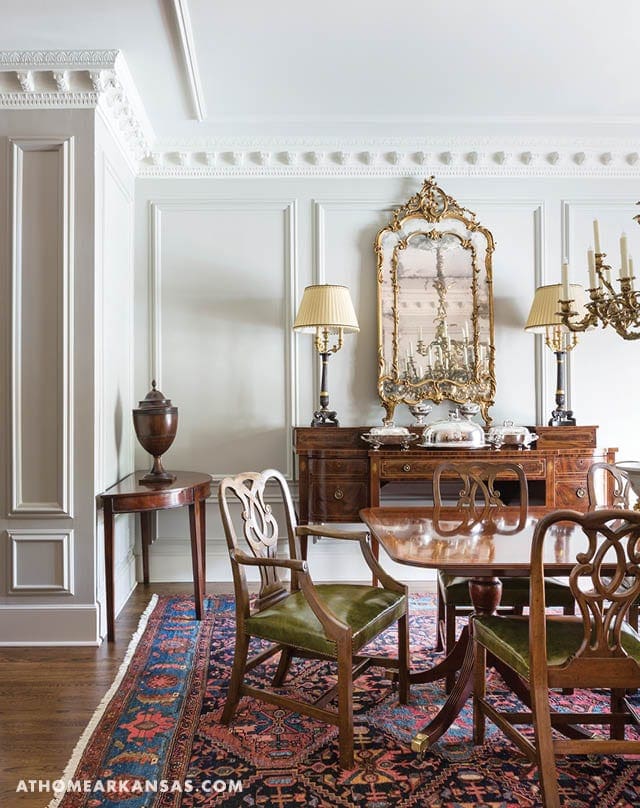
Adjacent to the kitchen, the dining room is the home’s only eating space. “This was the Baileys’ private residence, and I took a lot of the styling cues from them and the way they lived and entertained,” Woodward says. The pretzel-back dining chairs by Baker are covered in olive-green leather (“Save your Fortuny for a spot where you won’t spill gravy,” Woodward suggests), and several pieces of the family’s silver are more than display items. “I believe in using the good stuff,” Woodward says. “If you have it, why not use it?”
In the Family
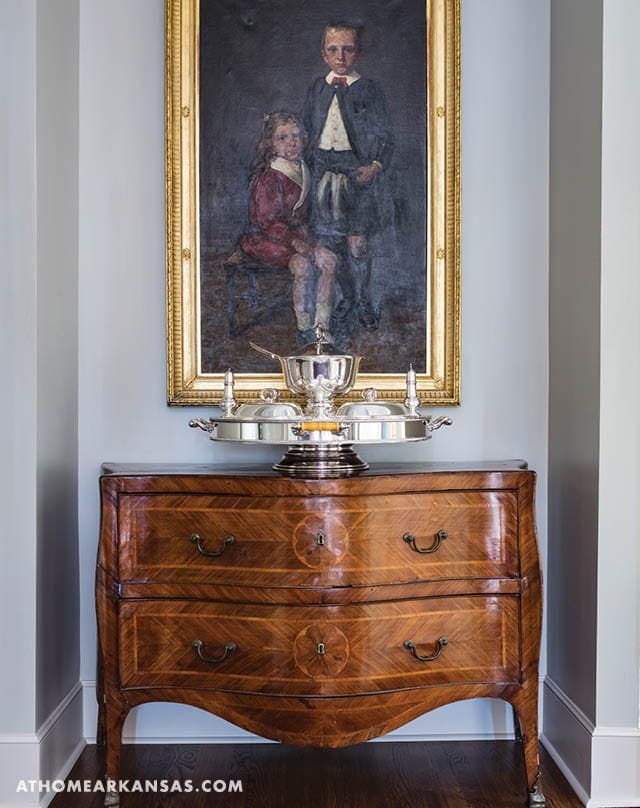
“I love to use family pieces, but I think it is important not to force it,” Woodward says. “If something isn’t working, call up a relative and see if anyone else is interested.” Case-in-point, the gilt mirror in the dining room. “I had my eye on it at Marshall Clements for several years,” he recalls. “And sure, there were a few other [family owned] things I could have used in that space, but this one just makes me happy.” Many of the family’s 18th- and 19th-century antiques did make the move from their Edgehill residence, including a bronze chandelier and several Persian rugs, from which Woodward likes to pull the color scheme for a room.
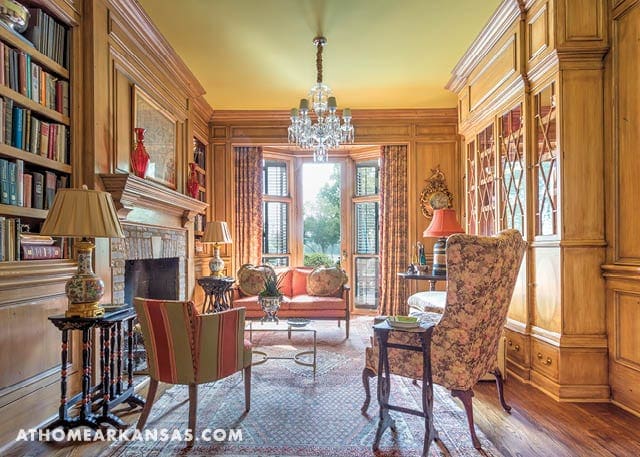
Woodward’s late father was state geologist emeritus and had a fantastic trove of state-related treasures. A collection of Arkansas maps that spans three generations is on display in the cozy map room—a favorite spot for after-dinner drinks. An 1871 map by David Fulton Shall, the state’s first cartographer, has the prominent position over the mantle. Woodward had a mahogany sideboard built into one wall and hired David Zoellner to give the room a faux bois finish.
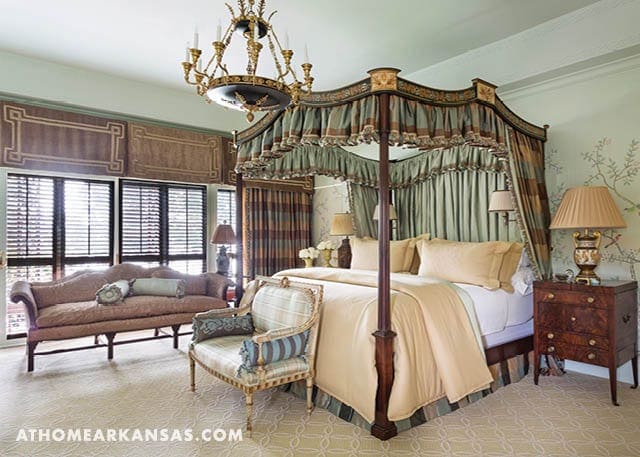
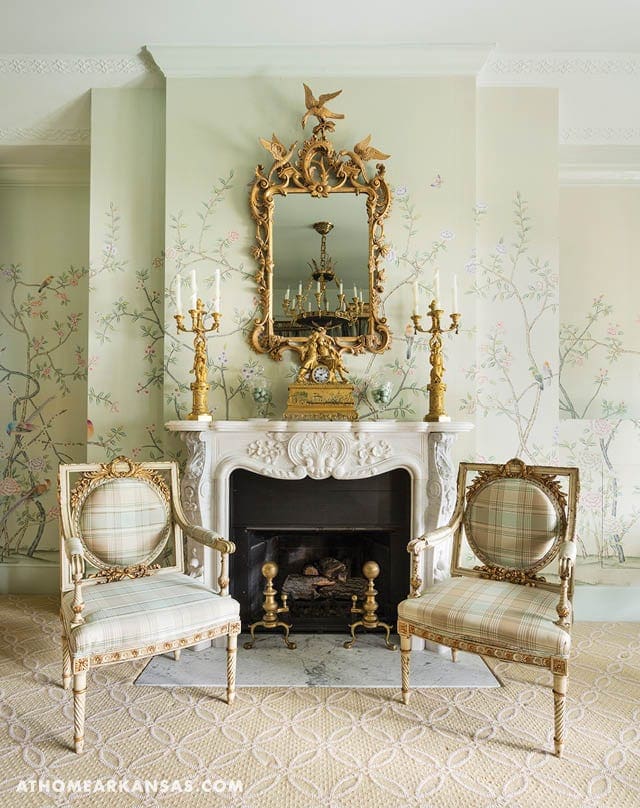
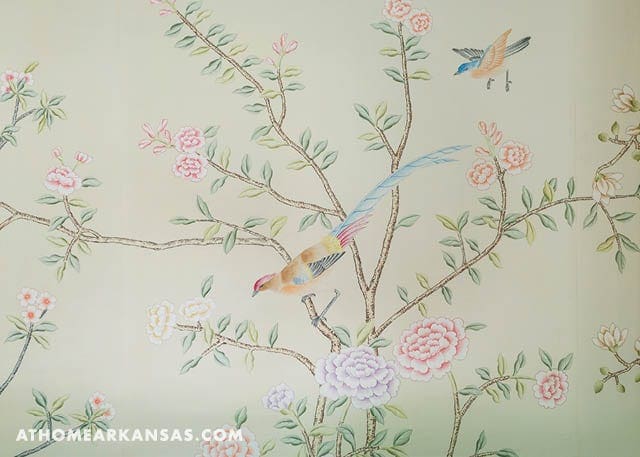
Upstairs, the master bedroom has the feel of a fine European hotel room, with a custom hand-painted Chinoiserie wallpaper by Griffin & Wong. French furnishings, including a new marble mantle, an Empire-style bed, and lush draperies give the room a sense of history.
“There is something very practical and Southern about using what you already own, just in a new way,” Woodward says. “And I do believe in paring down, just pare down with the very best you can afford.”
Design Resources
Contractor Richard Harp, Richard Harp Homes, Inc., Little Rock, (501) 690-4277, richardharphomes.com
Interior design M. Bruce Woodward, M. Bruce Woodward Interiors and Design, Little Rock and Magnolia, (501) 681-4630
Landscaping David Munsey, Better Lawns & Gardens, Little Rock, (501) 454-9803, betterlawnsar.com
Accessories, art, fabrics, furniture, hardware, and wall coverings M. Bruce Woodward Interiors and Design, Little Rock and Magnolia, (501) 681-4630
Glass West Little Rock Glass, Little Rock, (501) 223-3034, westlittlerockglass.net
Lighting The Shade Above, Little Rock, (501) 374-3555, theshadeabove.com
Mirror Marshall Clements, Little Rock, (501) 663-1828, West Little Rock, (501) 954-7900, marshallclements.com
Painting Greg Taylor, CertaPro Painters, (501) 223-8998, little-rock.certapro.com
Painting—decorative David Zoellner, Metropolitan Decorating, Little Rock, (501) 529-2079, zartistguy.com
Rugs Hadidi Oriental Rug Co., Little Rock, (501) 225-8999, hadidiruggallery.com
