Date: 2009-10-23 11:57:53 | Story: Diane Carroll |
The South is known for its lush and lovely gardens, with flowering trees and shrubs setting the framework with their glossy foliage, beautiful blooms or season-long staying power. Here in Arkansas, a wide variety of traditional favorites are locally grown and designed to flourish throughout our planting zones. We asked growers and nursery owners for some tips on working these garden icons into the home landscape.
 |
Magnolias
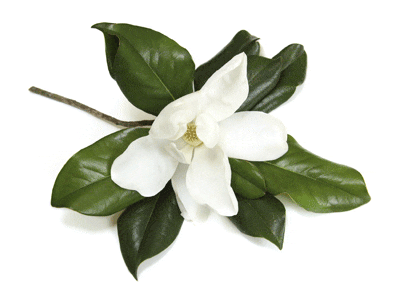
The staple of the Southern garden is the magnolia tree, which Donna Pittman King, owner of Pittman Nursery Corporation and Garden Center in Magnolia, and her family have been growing for four generations. She notes that Magnolia “Grandiflora,” or Southern Magnolia, is the classic, wide tree with glossy, evergreen leaves, fragrant blossoms and branches that extend all the way to the ground. Varieties like “Little Gem” can be planted in more compact areas, and newer hybrids have been developed that bloom earlier and last longer.
King recommends loose, moist, acid soil for planting, noting that the trees prefer full sunlight but can grow in shade. “Typically, they’ll grow more slowly in shade, and magnolias are not fast growers to begin with,” she adds, “and they do best in well-drained soil.” No matter the size or variety, King suggests that their elegant leaves and sculptural shapes make them a must for a true Southern garden. “The foliage is attractive in any landscape, and an added benefit is the beautiful flowers,” she says.
 |
Crape Myrtles
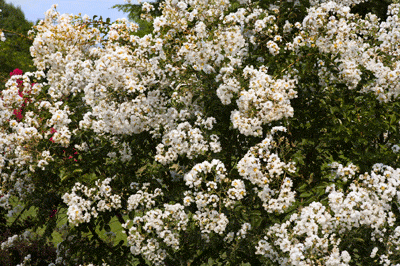
“Think of a formal allee of these graceful, beautiful trees with a large, umbrella-like canopy of blooms,” says Donna Bemis, owner of Bemis Tree Farm on the outskirts of Little Rock. “That’s the classic Southern garden use, and they make a great accent tree when placed near a seating area or a window with a view.”
Of the 10 varieties grown on their farm, Bemis recommends the “Natchez White” crape myrtle as a regional icon. “All of the varieties do well in our state,” she adds. “They’re a tough tree, fairly fast growing and can survive most conditions.”
Bemis notes that the most critical element in establishing a new tree is adequate watering for the first few years. “Make sure you water them deeply, twice a week, for the first three summers,” she says. “After that, they should do fine with just moderate water, and they don’t like to be too wet.”
 |
Hydrangeas
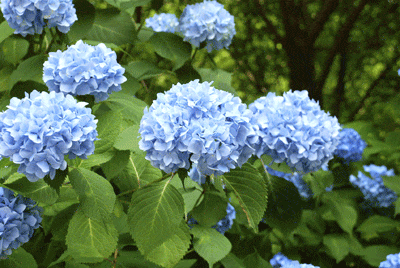
Known for their large, round flower heads, the “Nikko Blue” hydrangea is a perennial Southern favorite, notes Jeb Leggett, owner of Custom Landscape & Nursery in Mt. Vernon. “It’s one of the oldest varieties and can grow to be five or six feet tall, making it a mass of color in the spring.” Soil acidity determines bloom color, varying from deep blue in acid soil to pale blue or even pink in alkaline areas.
A shady setting with an eastern or northern exposure is ideal, and the plants will tolerate morning sun, says Leggett, as long as they receive adequate watering and are in a well-drained area.
While traditional varieties set buds on last season’s growth, meaning that a late freeze in the spring can limit blooms for the year, the newer varieties such as “Endless Summer” have been cultivated to bloom on new growth as well. “That increases their reliability,” says Leggett, “and allows them to bloom throughout the growing season.”
 |
Azaleas
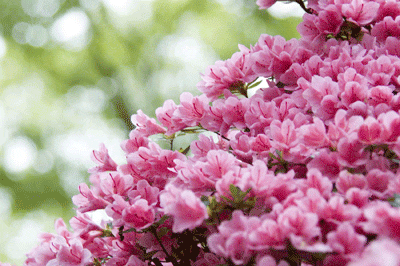
“They’re a classic woodland garden plant,” says Leggett. “And as such, they prefer high shade, planted near pine trees or a similar setting.” Leggett notes that newer varieties have been cultivated to be more sun tolerant, but that they all grow best in well-drained soil. “They thrive when planted in a raised setting,” he adds. “Most azaleas I’ve seen that aren’t doing well have been planted below grade and face drainage issues.”
Old-fashioned favorites include the Indica varieties like “George L. Taber” and “Mrs. G.G. Gerbing,” which sport large pink or white flowers, grow fast and can reach six to eight feet in height. Dwarf Indicas like the “Gumpo” group are common as well, chosen for their compact forms and ruffled flowers as a garden accent.
A new Southern favorite is the patented brand of repeat-blooming Encore azaleas, which Leggett says will prosper in all parts of the state and typically bloom three times a year. “For most gardeners, they want more blooms, more often, and this plant delivers that,” he adds.
