Date: 2009-08-19 09:19:14 |
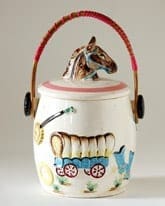
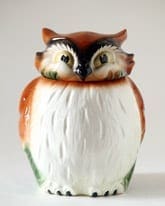
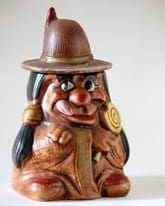
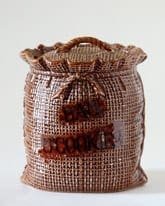
Jo Grounds knows a thing or two about cookie jars. An avid collector since the mid 1970s, she has always loved antiquing and naturally gravitated toward the pretty colors and personality of the cookie jars she encountered in antique stores and flea markets. “It’s the whimsical nature of it,” she says of her collection. “They make me happy.” She has since amassed more than 500.
Jo Grounds knows a thing or two about cookie jars. An avid collector since the mid 1970s, she has always loved antiquing and naturally gravitated toward the pretty colors and personality of the cookie jars she encountered in antique stores and flea markets. “It’s the whimsical nature of it,” she says of her collection. “They make me happy.” She has since amassed more than 500. And she speaks of each one as if it were an old friend—recalling in detail the story of how and where she acquired it, whether on a family trip, out shopping with friends or at a roadside church sale.
 |
 |
 |
For the past 17 years, Jo and her twin sister, Jan Smith, have celebrated their birthday with a special antiquing road trip, which has also contributed to Jo’s swelling collection. “Every year we go somewhere different,” she explains, noting excursions as far away as Missouri, Oklahoma, Texas and Louisiana. Regardless of monetary worth, the ongoing search for a cookie jar that simply makes her smile is what most appeals to this collector. “I’m not a purist,” she says. “I pay accordingly, but if it’s got a chip or a nick and I like it, I’ll buy it anyway.”
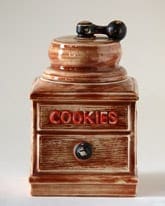
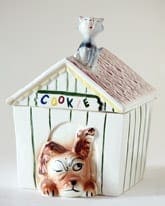
However, many of Jo’s more collectible finds date back to the 1930s or 1940s and were produced by some of the companies that are the most sought-after by today’s collectors. Cookie jars gained popularity in America during the Great Depression as glass jars with screw-on lids. But as ceramic became the material of choice, they began to surface in nearly every imaginable shape. Particularly in Jo’s collection, coveted designs by Shawnee Pottery, American Bisque, McCoy Pottery, Brush Pottery, Napco and Sierra Vista all make appearances. One of Jo’s most loved discoveries, from Sierra Vista, depicts a cat sitting on a doghouse, especially rare since the easily broken cat is still intact. And a distinguishing feature of her McCoy jars, some of the first she acquired, is that they have faded over time. They were cold painted, or decoratively painted after they were fired and glazed, while the jars that have maintained their color were painted before the glaze was applied.
 |
 |
 |
In recent years, Jo has turned to eBay in her ventures, which has proven to have its advantages and disadvantages. “It takes a little bit of the fun out of it,” she admits. Although eBay brings a whole new world of cookie jars to her fingertips, Jo warns new collectors about the prevalence of online reproductions. In particular, she points out that while the Brush and McCoy companies did merge, they never made an original cookie jar labeled “Brush-McCoy,” as some online sellers might suggest.
An illustrated reference book by noted author Ermagene Westfall (An Illustrated Value Guide to Cookie Jars) is an important guide for collectors and has served Jo well over the years. But considering her vast collection and knowledge on the subject, it’s about time Jo wrote a book of her own. “It can be an addiction,” she laughs. “It’s not a bad thing.”
